
Bulk lipase for tanneries and leather-chemical suppliers who degrease hides and skins in the beamhouse. Grade, pack and pricing are quoted per order against your raw stock and process stage.
Request a quote: send the product you make, the quantity per order or per month, and the destination country. Request a quote
Lipase for leather degreasing
Natural hide fat is not uniform. It sits in follicles, fiber bundles, grain structures, and fatty areas where water, surfactant, and tanning chemistry do not always reach cleanly. Lipase supports controlled modification of those lipids so degreasing becomes more predictable, less aggressive, and easier to integrate into modern wet processing.
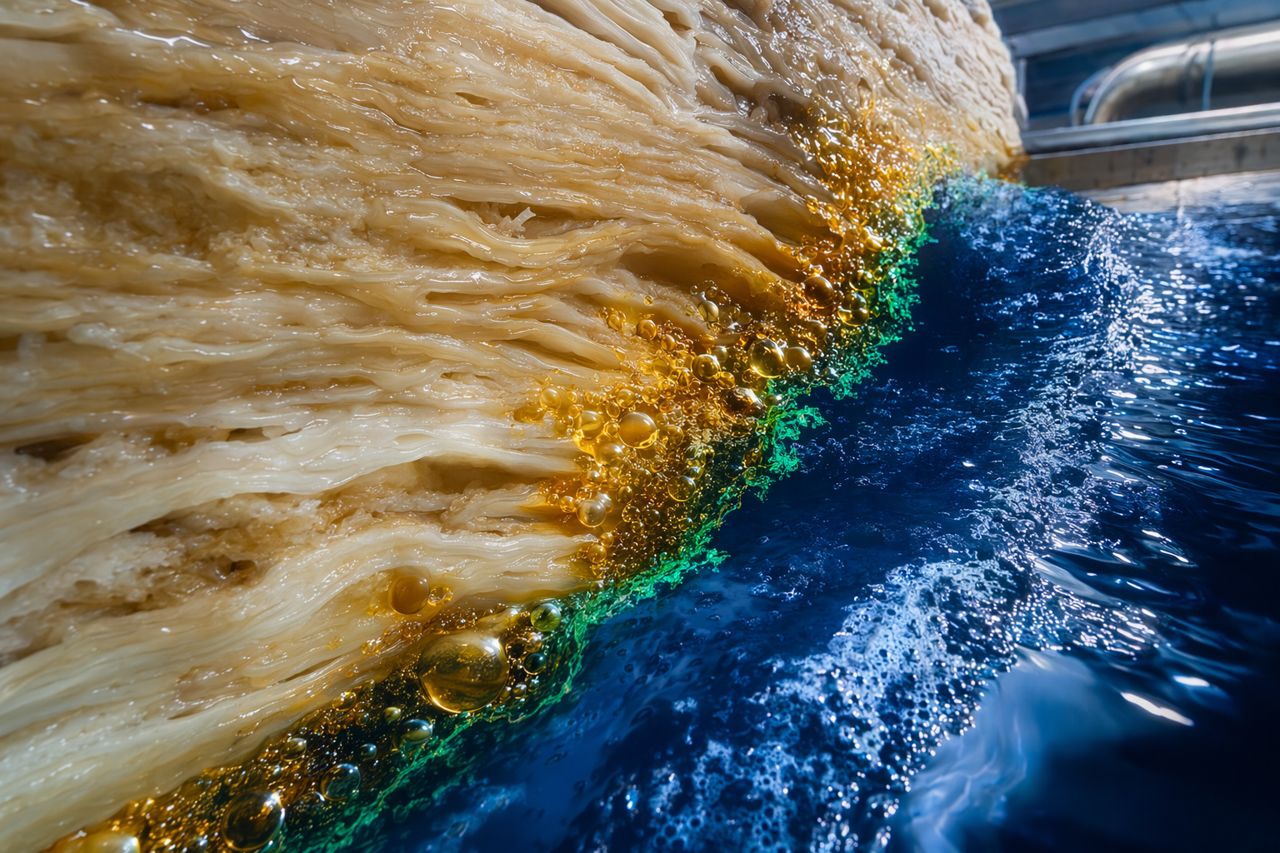
Lipase — properly, Lipase (triacylglycerol acylhydrolase) — acts at the oil-water interface. In leather processing, that interface is where embedded triglycerides meet aqueous float chemistry. By hydrolyzing triglycerides into more removable lipid fragments, lipase can assist fat release, improve wetting, and reduce fat-related variation before tanning, dyeing, and finishing.
Where lipase adds value in the tannery
Lipase is used as a practical control tool when natural grease becomes a barrier to clean processing.
Typical B2B use cases include:
- Ovine and wool-bearing skins with high natural fat content and uneven grease distribution
- Porcine skins where fat deposits can interfere with uniform penetration and surface quality
- Bovine hides with localized fatty areas that create inconsistent wetting or dye response
- Aqueous degreasing systems looking to reduce dependence on harsher solvent-heavy approaches
- Preparatory wet-end stages where cleaner lipid management supports tanning and finishing consistency
The goal is not simply to strip fat. The goal is to modify the right lipid fraction at the right process point, while protecting fiber structure and downstream leather character.
What buyers should expect from an enzymatic degreasing aid
A well-matched lipase can help support:
- Cleaner wetting of fatty hides and skins
- More even penetration of beamhouse, tanning, and dyeing chemicals
- Reduced risk of fatty spew, dull patches, and uneven shade development
- Better process repeatability across variable raw material lots
- Lower reliance on aggressive degreasing chemistry where the process allows
- Improved interface control in emulsified, surfactant-assisted systems
Performance depends on substrate type, float design, pH window, temperature profile, surfactant package, mechanical action, and the point of addition. Lipase Enzyme Solutions treats lipase selection as a process-fit decision, not a catalog shortcut.
How lipase works at the hide-water interface
Triglycerides are hydrophobic, but leather processing is largely aqueous. Lipase is useful because it operates where those two phases meet. At the boundary between grease and float, the enzyme can cleave ester bonds in triglycerides, generating smaller lipid-derived components that are easier for the process liquor and surfactant system to mobilize.
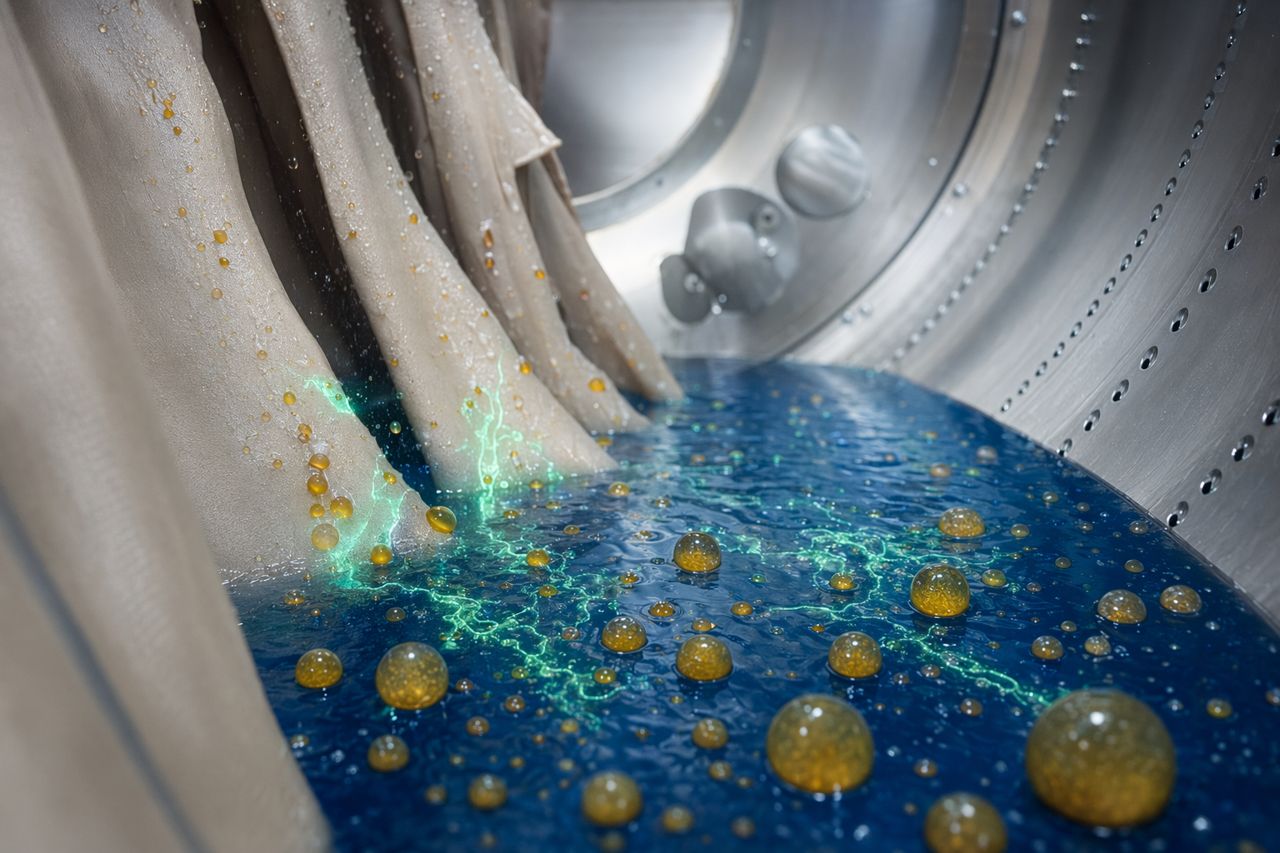
That interfacial behavior matters. In a tannery drum, the most important chemistry is often happening at contact zones: fat-water, fiber-water, and surfactant-lipid interfaces. Lipase helps make those zones more reactive without requiring the entire process to become harsher.
Integration points in leather processing
Lipase may be evaluated in several process positions, depending on the tannery objective:
Soaking support
For fatty raw material, lipase can assist early wetting and grease loosening. This can help the hide or skin respond more uniformly to subsequent wet-end chemistry.
Enzymatic degreasing
In dedicated degreasing stages, lipase can work alongside carefully selected surfactants and mechanical action to improve lipid removal or modification.
Preparatory treatment before tanning
Where residual fat disrupts tanning uniformity, lipase may be used as part of a controlled preparation strategy before chrome-free, chrome, aldehyde, or specialty tanning systems.
Specialty leather programs
For premium articles where softness, grain clarity, dye levelness, and low defect tolerance matter, enzymatic degreasing can provide a more precise control point than purely chemical fat removal.
Trial design: what to measure
For industrial buyers and application teams, lipase screening should be judged by tannery-relevant outcomes, not by a lab label alone.
Useful trial criteria include:
- Residual fat level by the tannery’s preferred internal method
- Uniformity of wetting through the cross-section
- Dye levelness and shade consistency
- Grain cleanliness and surface clarity
- Incidence of fatty spew or oil-related defects
- Handle, fullness, and fiber integrity after downstream processing
- Wastewater oil and grease trend versus the current process
- Compatibility with existing surfactants, auxiliaries, and tanning chemistry
- Batch-to-batch consistency on the actual raw material mix
A good lipase program should make the process easier to control. If it only performs on ideal skins, it is not yet an industrial solution.
Formulation and compatibility considerations
Leather degreasing is a mixed-chemistry environment. Enzyme fit should be checked against:
- Raw material species and fat distribution
- Process stage and hold time
- Float ratio and mechanical action
- pH and temperature profile
- Salt, surfactant, and emulsifier package
- Preservation chemistry and antimicrobial systems
- Downstream tanning and retanning sequence
- Required final article properties
Lipase Enzyme Solutions can support product selection and trial planning around these variables so the enzyme is evaluated under realistic plant conditions.
Why lipase for leather
Lipase Enzyme Solutions is built around one industrial enzyme family and one operating principle: control the interface. For leather degreasing, that means helping tanneries manage the boundary between natural fat, aqueous chemistry, and collagen structure.
Our approach is concise and application-led:
- Match lipase behavior to hide type and process position
- Design trials around tannery outcomes, not generic claims
- Support aqueous degreasing strategies where feasible
- Prioritize consistency, compatibility, and downstream leather quality
- Communicate in practical process language for buyers, technicians, and application scientists
Request a quote or get pricing
Tell us what you process, where fat creates the problem, and what your current degreasing sequence looks like. We will respond with fit guidance and commercial next steps.
Request a bulk lipase quote
Wholesale and bulk supply for manufacturers, formulators and resellers. To get a quote, send the product you make, the quantity per order or per month, and the destination country, and tell us your application and preferred format (powder, liquid or granule). Pricing, pack format and lead time are quoted per order, and we tell you which documents are available for that grade.