
A checklist for purchasing and R&D teams at manufacturers, formulators and distributors before they request a bulk lipase quote. Supply is quoted per order.
Request a quote: send the product you make, the quantity per order or per month, and the destination country. Request a quote
Lipase Selection Checklist for Industrial Buyers
Lipase (triacylglycerol acylhydrolase) is an interfacial enzyme: it performs at the boundary where oils, fats, emulsions, water phases, solvents, and process surfaces meet. That makes selection more application-dependent than a simple product-name match.
Use this checklist to structure pre-purchase evaluation, compare supplier proposals, and reduce scale-up surprises before committing to a lipase program.
1. Define the lipid task before choosing the lipase
Start with the reaction objective. Lipases can support multiple industrial outcomes, but the best candidate depends on what you want the triglyceride, ester, or lipid-containing matrix to become.
Common industrial selection routes
- Hydrolysis: splitting triglycerides into free fatty acids, partial glycerides, and glycerol-rich fractions.
- Esterification: building esters from acids and alcohols under controlled water conditions.
- Transesterification: exchanging alcohol groups for biodiesel, specialty esters, processing aids, and oleochemical intermediates.
- Interesterification: rearranging fatty acid positions to modify melting behavior, plasticity, or functional fat profile.
- Flavor and aroma release: generating targeted lipid-derived notes in dairy, bakery, fermentation, or savory systems.
- Degreasing and cleaning: breaking down fats and oily residues in detergent, wastewater, leather, textile, or maintenance applications.
- Emulsion and membrane management: reducing fouling, improving separation, or changing surface behavior in lipid-rich streams.
Buyer checkpoint: write the target change in process language, not enzyme language. Examples: increase conversion, reduce residual oil, improve filtration, shorten reaction hold time, release a defined flavor profile, reduce grease load, or change melting behavior.
2. Map the real substrate, not the ideal substrate
Lipase performance is highly sensitive to feedstock composition. A candidate that looks strong on a clean model oil may behave differently in a crude, blended, recycled, or emulsified industrial stream.
Substrate details to share with your supplier
- Primary lipid source: vegetable oil, animal fat, dairy fat, marine oil, used cooking oil, tall oil, wax ester, mono- or diglyceride blend, phospholipid-rich stream, or mixed wastewater grease.
- Free fatty acid level and expected variability.
- Water content and whether water is intentionally added, removed, or controlled.
- Emulsifiers, surfactants, salts, preservatives, antioxidants, pigments, proteins, solids, or metal ions.
- Contaminants that may inhibit enzymes or complicate downstream handling.
- Batch-to-batch variability and seasonal feedstock shifts.
Practical rule: if your feedstock is variable, select for robustness first and peak performance second.
3. Specify the process window
Lipase selection should match the operating envelope, not the laboratory ideal. The same enzyme can behave differently across temperature, pH, water activity, solvent exposure, mixing energy, and residence time.
Process inputs to document
- Operating temperature range and heat-up profile.
- pH range or acidity of the reaction medium.
- Water phase ratio, moisture control, or water-removal strategy.
- Solvent presence, solvent-free conditions, or high-oil systems.
- Agitation intensity, shear, emulsification method, and mass-transfer limitations.
- Reaction time target or continuous residence time.
- Clean-in-place, sanitation, or carryover conditions that may affect reuse.
Selection cue: lipases work at interfaces. Mixing, droplet size, emulsifier choice, and phase contact can be as important as the enzyme itself.
4. Decide whether you need free or immobilized lipase
Format choice drives economics, process design, and downstream separation.
Free lipase may fit when
- The enzyme remains in the aqueous phase and can be removed or inactivated downstream.
- The process is single-use, low-complexity, or cost-sensitive.
- Fast contact with dispersed lipid is more important than enzyme recovery.
- Final product specifications allow the chosen processing route.
Immobilized lipase may fit when
- Reuse is important to total cost.
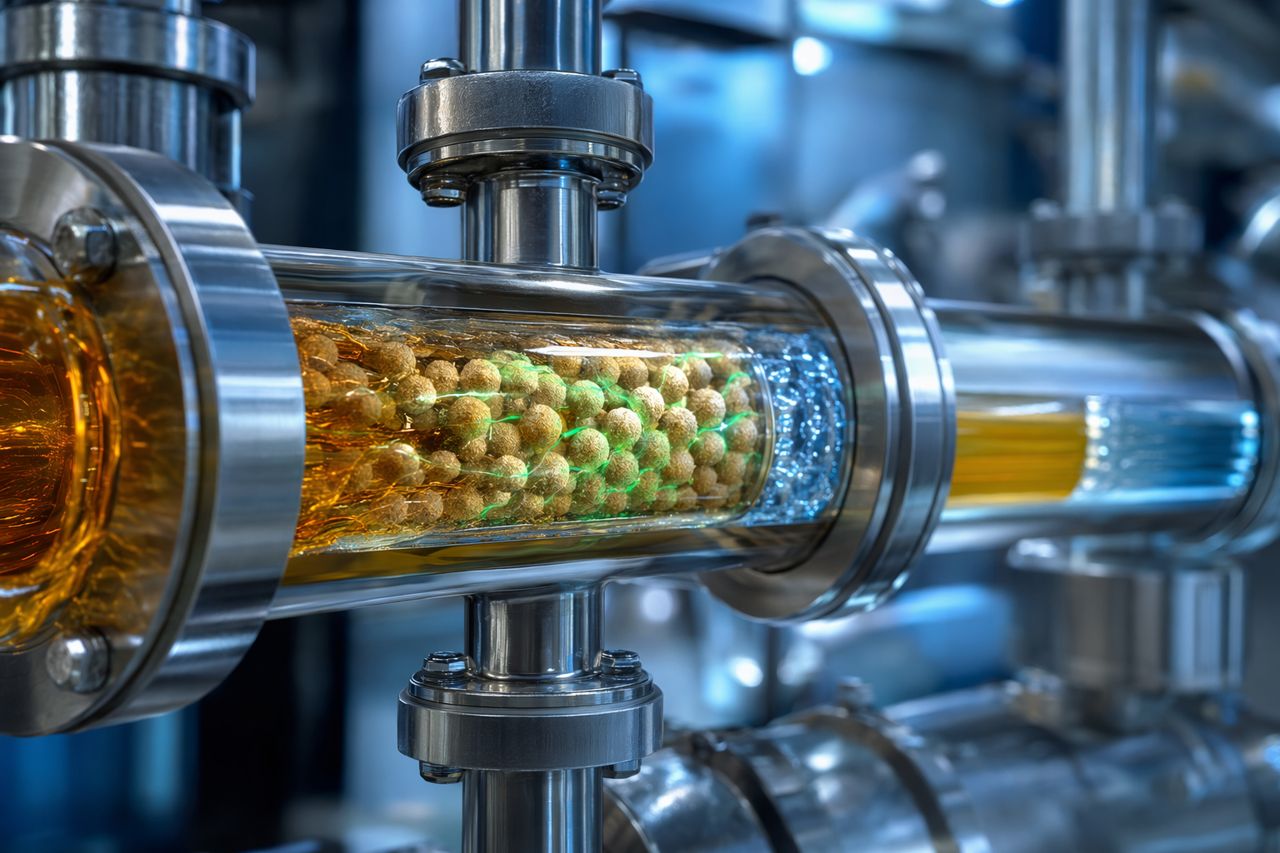
- Continuous packed-bed, recirculating, or controlled-flow processing is planned.
- Product purification benefits from keeping catalyst out of the bulk phase.
- The reaction involves solvent, low-water systems, esterification, or interesterification.
Procurement note: immobilized lipase should be evaluated with support stability, pressure drop, attrition, cleanability, and reuse profile, not only initial reaction speed.
5. Match specificity to the commercial outcome
Lipases differ in substrate preference and positional selectivity. For some applications, broad fat breakdown is desirable. For others, selectivity determines product quality.
Specificity questions to ask
- Do you need broad triglyceride hydrolysis or targeted fatty acid release?
- Is sn-1,3 positional preference important for structured lipids or functional fats?
- Are short-chain, medium-chain, or long-chain fatty acids the priority?
- Is the goal to minimize off-notes, soap formation, unwanted mono- and diglycerides, or over-hydrolysis?
- Does the process require consistent performance across mixed lipid classes?
Quality cue: the right lipase is often the one that stops at the right product distribution, not the one that reacts the fastest.
6. Define measurable acceptance targets
Avoid vague evaluation language. Before requesting samples, agree on what success looks like in your process.
Useful performance targets
- Conversion percentage or target product distribution.
- Free fatty acid release or reduction.
- Residual oil, grease, or fat content after treatment.
- Yield of desired ester or structured lipid fraction.
- Reaction time reduction versus current process.
- Filtration rate, phase separation quality, or membrane throughput.
- Viscosity change, emulsion break time, or cleaning performance.
- Sensory profile, odor control, or flavor-release consistency.
- Downstream color, haze, sediment, or impurity burden.
Important: request performance evidence on your substrate or a close representative matrix. Generic data sheets rarely capture industrial interface behavior.
7. Check compatibility with downstream operations
A lipase that performs well in reaction can still create downstream cost if it complicates separation, purification, filtration, drying, or product stability.
Downstream questions
- Will the enzyme remain in product, partition to water, bind solids, or be captured on a support?
- How will the reaction be stopped, slowed, or separated from the product stream?
- Does the process create soaps, emulsions, haze, or fine particulates?
- Will residual protein, support material, or carrier ingredients affect specifications?
- Does the enzyme format change cleaning, wastewater, or disposal requirements?
- Are there thermal, pH, or chemical steps that may alter product quality?
Scale-up cue: bench conversion is only one metric. Separation behavior often decides the commercial case.
8. Confirm regulatory and market fit early
Lipase sourcing and format must align with the end market. Requirements differ across food processing, dietary ingredients, animal nutrition, detergents, oleochemicals, biofuels, cosmetics, textiles, leather, and wastewater treatment.
Documents and confirmations to request
- Intended-use suitability for your market and geography.
- Food, feed, technical, or processing-aid positioning as applicable.
- Allergen, GMO, residual solvent, heavy metal, and microbial quality statements where relevant.
- Country-specific compliance support for import, labeling, or customer documentation.
- Safety data sheet and handling guidance.
- Shelf-life, storage conditions, packaging options, and lot traceability.
Buyer checkpoint: align documentation needs before technical trials. Regulatory gaps can delay purchasing even after a successful pilot.
9. Evaluate supply format, logistics, and handling
Industrial lipase buying is not just about reaction fit. Procurement teams need a reliable supply form that works with plant realities.
Procurement details to compare
- Liquid, powder, granule, or immobilized format.
- Storage temperature and warehouse compatibility.
- Packaging size options for pilot, validation, and production use.
- Dust control, spill handling, and operator exposure controls.
- Lot consistency and change-control communication.
- Lead time, forecast flexibility, and contingency planning.
- Technical support availability during trial, pilot, and launch.
Commercial cue: the lowest quoted price may not be the lowest process cost if dosage, yield, downtime, reuse, or separation penalties are unfavorable.
10. Build a staged trial plan
A disciplined trial plan makes supplier comparison faster and fairer.
Recommended evaluation sequence
- Desk screen: align application, substrate, process window, documentation, and format.
- Small-scale feasibility: compare candidates against agreed acceptance targets using your substrate.
- Process optimization: adjust pH, temperature, water level, mixing, enzyme addition point, and hold time.
- Downstream check: test separation, filtration, product quality, and residual effects.
- Pilot validation: run representative equipment, feedstock variability, and process controls.
- Commercial confirmation: lock specifications, packaging, lead time, documentation, and support plan.
Decision standard: advance the lipase that gives the strongest total process case, not just the most attractive first trial result.
Lipase supplier question list
Use these questions when requesting a technical proposal or quotation:
- Which lipase format do you recommend for this substrate and why?
- What process conditions should we test first?
- What substrate or inhibitor risks should we watch for?
- Is the enzyme better suited to hydrolysis, esterification, transesterification, or interesterification?
- Does the lipase show positional or fatty-acid-chain preference relevant to our target product?
- What documentation is available for our market and region?
- How should we store, handle, add, and, if needed, separate the enzyme?
- What scale-up variables most often change performance?
- What acceptance targets should we use for a fair trial?
- What packaging and lead-time options are available for pilot and production supply?
Quick selection checklist
- [ ] Target reaction and commercial outcome are defined.
- [ ] Real substrate composition and variability are documented.
- [ ] Temperature, pH, water level, solvent exposure, mixing, and residence time are known.
- [ ] Free versus immobilized format is justified.
- [ ] Selectivity requirements are clear.
- [ ] Downstream separation and product-quality impact are included.
- [ ] Regulatory and documentation requirements are confirmed.
- [ ] Packaging, storage, handling, and lead-time needs are practical.
- [ ] Trial acceptance targets are measurable.
- [ ] Supplier comparison uses the same substrate and decision criteria.
Request a lipase quote
Share your substrate, target reaction, process window, and documentation requirements. Lipase Enzyme Solutions can help narrow the lipase format and trial path before you commit to production purchasing.
Prefer a direct pricing discussion? Use the same form and include expected annual volume, trial timeline, and required documentation so the team can get pricing aligned to your application.
Request a bulk lipase quote
Wholesale and bulk supply for manufacturers, formulators and resellers. To get a quote, send the product you make, the quantity per order or per month, and the destination country, and tell us your application and preferred format (powder, liquid or granule). Pricing, pack format and lead time are quoted per order, and we tell you which documents are available for that grade.