
For manufacturers, formulators and resellers buying lipase in bulk: this page explains how the enzyme works so you can brief us on the right grade. Wholesale supply is quoted per order.
Request a quote: send the product you make, the quantity per order or per month, and the destination country. Request a quote
How Lipase Works on Fats, Oils, and Esters
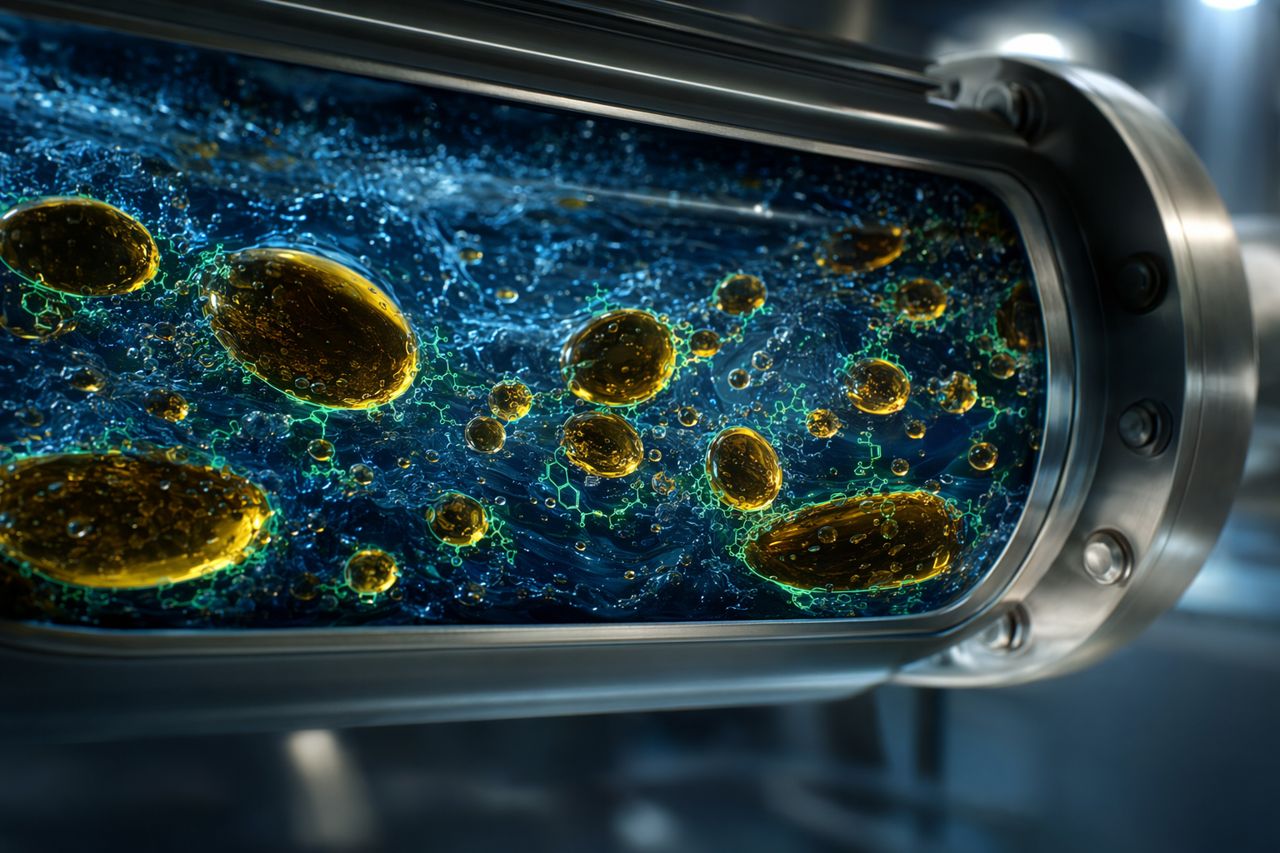
Lipase is the enzyme that makes oil chemistry controllable at the boundary where water and lipids meet. For industrial buyers, that matters because most fat, oil, and ester processes are not simple bulk reactions. They happen in emulsions, on droplet surfaces, in mixed phases, or across immobilized catalyst beds where contact, diffusion, and water availability decide the final result.
Lipase (triacylglycerol acylhydrolase) catalyzes the cleavage and formation of ester bonds in glycerides and related lipid substrates. In the right process environment, it can support hydrolysis, esterification, and transesterification pathways with a degree of selectivity that conventional chemical catalysts often cannot provide.
This page explains the mechanism in buyer-useful terms: what lipase recognizes, where the reaction occurs, what products are formed, and which process variables shape performance.
The short version
Lipase acts on ester bonds in fats, oils, and lipid-derived esters. Its practical value comes from three features:
- Interfacial action: many lipases become most effective at the oil-water interface, not in a single uniform phase.
- Substrate selectivity: lipase may prefer certain glyceride positions, fatty acid chain types, or ester structures.
- Mild process chemistry: reactions can be directed without harsh chemical conditions, helping preserve sensitive feedstocks and reduce downstream neutralization burden.
In a triglyceride hydrolysis process, lipase converts oil into free fatty acids, partial glycerides, and eventually glycerol, depending on reaction depth and residence time. In low-water systems, the same catalytic logic can be redirected toward ester formation or fatty acid exchange.
What lipase actually targets
Most natural fats and oils are rich in triacylglycerols, also called triglycerides. A triglyceride contains a glycerol backbone esterified with three fatty acid chains. Lipase recognizes the ester linkage between the fatty acid and the glycerol structure.
Core substrate classes
Lipase can be relevant to processes involving:
- Vegetable oils and animal fats
- Triglycerides, diglycerides, and monoglycerides
- Fatty acid esters
- Short- and medium-chain esters used in aroma, solvent, or specialty applications
- Structured lipids and modified glyceride streams
- Oily residues, wastewater emulsions, and fat-containing process side streams
The exact fit depends on the enzyme form, feedstock composition, water level, emulsification, and process objective.
The interfacial mechanism
Lipase is often described as an interfacial enzyme because its activity is strongly linked to the boundary between an aqueous phase and a lipid phase.
In many lipases, the active site is partially shielded by a mobile structural region often called a lid. When the enzyme encounters a lipid-water interface, that lid can shift, exposing the catalytic pocket. The enzyme then binds the ester-containing substrate and positions it for reaction.
Step by step: hydrolysis of a triglyceride
-
Adsorption at the interface
Lipase migrates to the surface of an oil droplet, fat particle, membrane, or dispersed lipid phase. -
Active-site opening
Interfacial contact changes the enzyme conformation so the catalytic pocket becomes accessible. -
Ester bond positioning
A triglyceride or partial glyceride aligns in the binding pocket. The enzyme may favor certain positions on the glycerol backbone or certain fatty acid structures. -
Acyl-enzyme formation
The catalytic machinery attacks the ester bond, temporarily forming an acylated enzyme intermediate and releasing a glyceride fragment. -
Water-driven deacylation
Water resolves the intermediate, releasing a free fatty acid and regenerating the enzyme for another catalytic cycle. -
Progressive conversion
The process can continue from triglyceride to diglyceride, monoglyceride, free fatty acids, and glycerol depending on process design.
The industrial point: lipase performance is not only about enzyme identity. It is also about how well the process presents the lipid interface.
Why the interface controls performance
In fat and oil systems, the reaction surface can be more important than the bulk volume. A well-managed interface gives lipase more accessible ester bonds and better turnover.
Important interface factors include:
- Droplet size and emulsion stability
- Mixing intensity without destructive shear
- Water distribution and local availability
- Surfactants or natural emulsifiers in the feedstock
- Salt, alcohol, solvent, or co-product effects
- Mass transfer through viscous oil phases
- Surface compatibility in immobilized systems
For buyers comparing lipase options, the question is not simply “Will it hydrolyze oil?” A better question is: Can it maintain conversion and selectivity under our actual interface conditions?
Hydrolysis, esterification, and transesterification
Lipase can support different reaction directions depending on water activity and process design.
Hydrolysis
In water-present systems, lipase cleaves ester bonds. This is useful when the target is controlled release of fatty acids, breakdown of residual fats, degumming support, cleaning of oily residues, or pretreatment of lipid-rich streams.
Typical tracked outputs include:
- Free fatty acid profile
- Reduction of triglyceride content
- Partial glyceride distribution
- Glycerol formation
- Emulsion behavior after reaction
- Downstream separation load
Esterification
In lower-water systems, lipase can help form ester bonds between fatty acids and alcohols. This is relevant for specialty esters, flavor and fragrance intermediates, cosmetic emollients, lubricant esters, and other oleochemical derivatives.
Tracked outputs often include:
- Target ester formation
- Residual acid level
- Residual alcohol level
- Color and odor preservation
- By-product minimization
- Ease of catalyst separation or reuse
Transesterification and interesterification
Lipase can also exchange acyl groups between ester molecules. In the right system, this can alter melting behavior, functionality, or fatty acid distribution without full breakdown into fatty acids.
This pathway is useful when the target is not simply “more conversion,” but a specific glyceride structure or product profile.
Selectivity: the reason lipase is not just a mild catalyst
The strongest case for lipase is often selectivity.
Depending on enzyme source and configuration, a lipase may show preference for:
- Position on glycerol: some lipases are more active at outer glycerol positions, supporting controlled formation of defined partial glycerides.
- Fatty acid chain length: certain lipases handle short, medium, or long chains differently.
- Degree of unsaturation: feedstocks rich in unsaturated fatty acids may require different screening logic than saturated fats.
- Bulkiness and branching: structured esters or specialty substrates can be limited by access to the active site.
- Water level: the same enzyme can behave differently as the system moves from hydrolysis toward ester synthesis.
This selectivity can reduce over-processing, protect sensitive components, simplify purification, and improve batch-to-batch product consistency.
Where lipase creates industrial value
Food and edible oil processing
Lipase can be used where controlled lipid modification is required, including flavor development, dairy fat transformation, structured lipid formation, and process support for oil streams. The buyer focus is usually sensory outcome, regulatory fit, conversion control, and clean downstream handling.
Oleochemicals and specialty esters
In oleochemical production, lipase can enable selective ester synthesis, lower harsh chemistry exposure, and improve product quality for high-value esters. It is especially relevant when color, odor, residual catalyst burden, or heat sensitivity matter.
Detergents and cleaning systems
Lipase helps break down fat-containing soils into more dispersible fragments. Formulation compatibility is the key issue: surfactants, builders, oxidants, pH environment, and storage format all affect final performance.
Leather, textiles, and fiber processing
Lipase can help remove or modify natural lipid components without aggressive chemical treatment. The practical value is cleaner surface behavior, more consistent wet processing, and reduced damage risk when compared with harsher alternatives.
Wastewater and fat-rich side streams
For streams containing fats, oils, and greases, lipase can assist pretreatment by reducing hydrophobic load and improving downstream biodegradability or separation. Feed variability and emulsion stability are critical evaluation points.
Biodiesel and renewable fuels
Lipase-mediated conversion can support ester formation from lipid feedstocks, including challenging oils where free fatty acids complicate conventional routes. Process economics depend heavily on enzyme format, feedstock quality, alcohol management, and reuse strategy.
Free lipase vs. immobilized lipase
Lipase may be supplied as a soluble enzyme preparation or immobilized on a solid support. Each format changes the process design.
Soluble lipase
Soluble lipase is often selected for emulsified systems, aqueous processing, cleaning applications, and one-pass treatment. It can distribute through the liquid phase and contact dispersed lipid surfaces effectively.
Best fit when:
- The feed is aqueous or emulsified
- The enzyme does not need to be recovered
- Fast dispersion is valuable
- Downstream separation of enzyme is not a primary constraint
Immobilized lipase
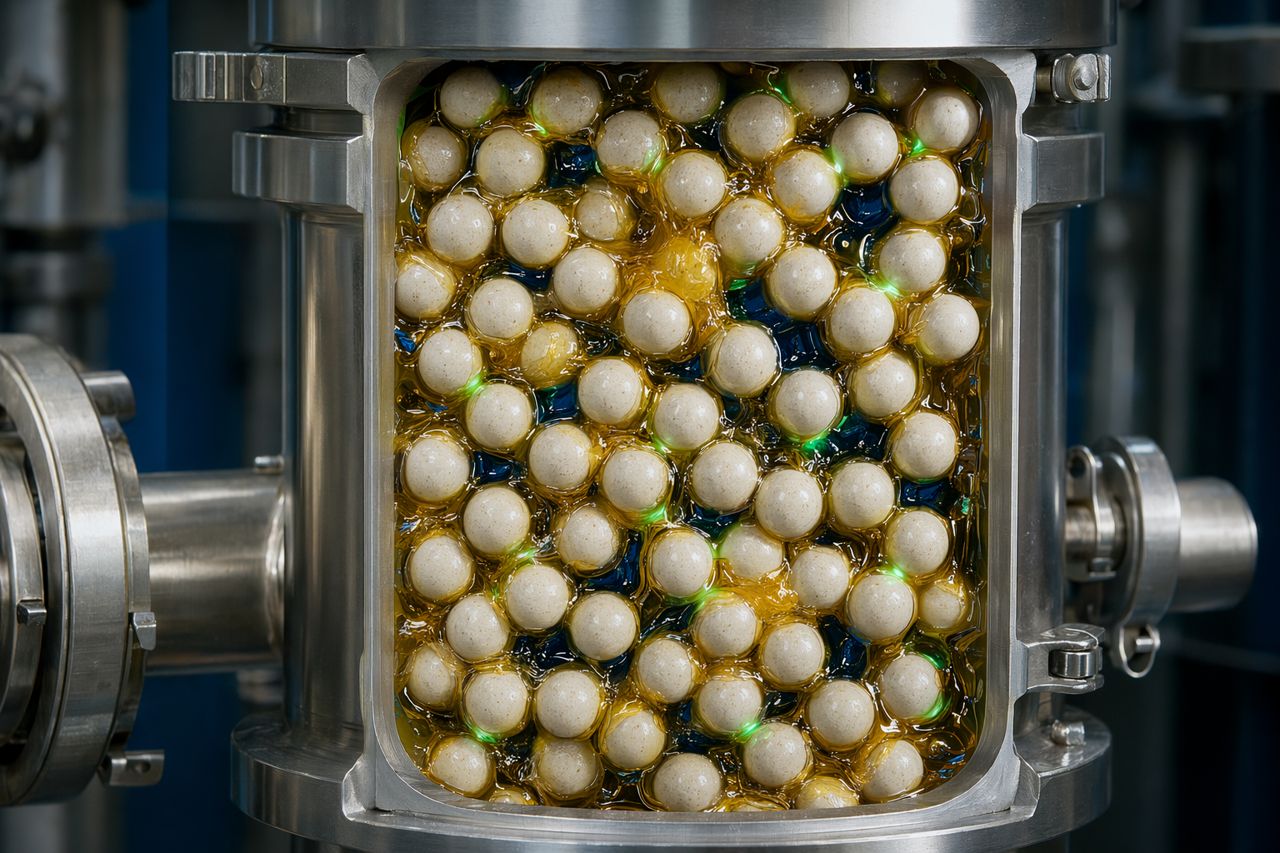
Immobilized lipase is bound to a carrier, making it easier to separate and reuse. It is often used in ester synthesis, packed-bed reactors, repeated batch systems, and controlled low-water processes.
Best fit when:
- Reuse is central to economics
- Product contamination from soluble protein must be minimized
- A fixed-bed or continuous process is planned
- Solvent, alcohol, or low-water conditions are part of the design
The right choice depends on feedstock, target product, reactor configuration, cleaning protocol, and acceptable cost per processed mass.
Process variables that shape lipase performance
When evaluating lipase for an industrial process, prioritize variables that directly affect contact, stability, and selectivity.
Feedstock composition
Crude oils, refined oils, animal fats, acid oils, used cooking oils, and specialty esters can behave very differently. Minor components such as phospholipids, soaps, pigments, oxidation products, metals, residual solvents, and natural emulsifiers may influence enzyme access and stability.
Water management
Water is not just a solvent. It helps determine reaction direction. More available water favors hydrolysis; lower water availability can favor ester formation or exchange reactions. In practice, water distribution at the interface can matter more than the total added amount.
Temperature window
Temperature affects viscosity, mass transfer, substrate solubility, and enzyme stability. Higher temperature can improve flow and contact, but excessive thermal exposure can shorten working life or change selectivity.
pH environment
For aqueous systems, pH affects enzyme structure, substrate ionization, fatty acid release, and emulsion behavior. The useful pH range should be confirmed in the actual formulation or process matrix, not only in a simplified lab medium.
Mixing and shear
Mixing creates interface, but uncontrolled shear can destabilize emulsions, damage immobilized carriers, or create separation problems. The goal is productive contact, not maximum agitation.
Alcohol and solvent exposure
In ester synthesis and biodiesel-type processes, alcohols and solvents can shift reaction direction but may also stress the enzyme. Stepwise addition, phase control, or immobilized formats are often considered to protect productivity.
Inhibitors and compatibility risks
Oxidants, strong surfactants, heavy metals, residual sanitizers, extreme pH, and aggressive solvents may reduce lipase performance. Compatibility screening should reflect the real plant formulation.
What buyers should specify before requesting lipase pricing
A strong enquiry saves time and produces a more relevant recommendation. Include the following where available:
- Feedstock type and key composition details
- Target reaction: hydrolysis, esterification, transesterification, or cleaning support
- Desired product profile or conversion endpoint
- Current process temperature, pH, water level, and residence time
- Batch, continuous, fixed-bed, or one-pass operation
- Any solvents, alcohols, surfactants, salts, or oxidants present
- Downstream separation requirements
- Regulatory or application constraints
- Trial scale and expected commercial volume
You do not need to finalize the full process before contacting Lipase Enzyme Solutions. A clear feedstock and target outcome are enough to start a technical fit discussion.
Common troubleshooting signals
Conversion is slower than expected
Likely causes include poor interface formation, high viscosity, low water availability for hydrolysis, enzyme incompatibility with the matrix, or insufficient residence time.
Free fatty acid profile is off target
The selected lipase may not match the feedstock’s chain-length distribution or glyceride structure. Positional selectivity may also be influencing partial glyceride formation.
Emulsion becomes difficult to separate
Lipase can change surface-active components as it releases fatty acids and partial glycerides. Separation behavior should be evaluated alongside conversion, especially in oil refining and wastewater applications.
Immobilized catalyst loses performance quickly
Potential causes include carrier fouling, alcohol shock, oxidation, feed impurities, microbial contamination, or cleaning conditions that are too aggressive for the enzyme-support system.
Product quality changes during scale-up
Scale-up changes interface area, heat transfer, water distribution, and residence-time distribution. Lipase processes should be scaled with mass transfer and phase behavior in mind.
Practical selection framework
Use this decision path when screening lipase for a new project:
-
Define the chemical job
Are you cleaving fats, forming esters, exchanging acyl groups, or improving removal of oily soil? -
Define the interface
Is the substrate dispersed, emulsified, immobilized, membrane-associated, or in a low-water organic phase? -
Define the required selectivity
Do you need broad conversion, position-specific action, chain-length preference, or protection of sensitive components? -
Define the process format
One-pass, batch, repeated batch, packed bed, cleaning formulation, or continuous reactor? -
Define the economic driver
Faster conversion, cleaner product, fewer by-products, easier downstream separation, reuse, lower chemical load, or access to a premium product profile?
A lipase that is excellent in one format may be the wrong choice in another. The best selection is made against the real substrate and the real process target.
Request a quote or technical fit review
If you are evaluating lipase for fat hydrolysis, ester synthesis, oil modification, cleaning performance, or lipid-rich stream treatment, send the process brief to Lipase Enzyme Solutions. We will help identify the right lipase format and pricing path for your application.
Key takeaway
Lipase works by turning the lipid-water boundary into a controlled reaction zone. It recognizes ester bonds, positions them inside a selective catalytic pocket, and converts fats, oils, and esters according to water level, interface quality, substrate structure, and process format.
For industrial users, the enzyme is most valuable when its mechanism is matched to the real plant problem: controlled hydrolysis, cleaner ester synthesis, selective lipid modification, better cleaning, or improved treatment of fat-rich streams.
Request a bulk lipase quote
Wholesale and bulk supply for manufacturers, formulators and resellers. To get a quote, send the product you make, the quantity per order or per month, and the destination country, and tell us your application and preferred format (powder, liquid or granule). Pricing, pack format and lead time are quoted per order, and we tell you which documents are available for that grade.