
For process engineers and buyers who need a lipase that holds up at their own pH and temperature. Send your process window with your inquiry; bulk supply is quoted per order.
Request a quote: send the product you make, the quantity per order or per month, and the destination country. Request a quote
Lipase pH and Temperature Considerations
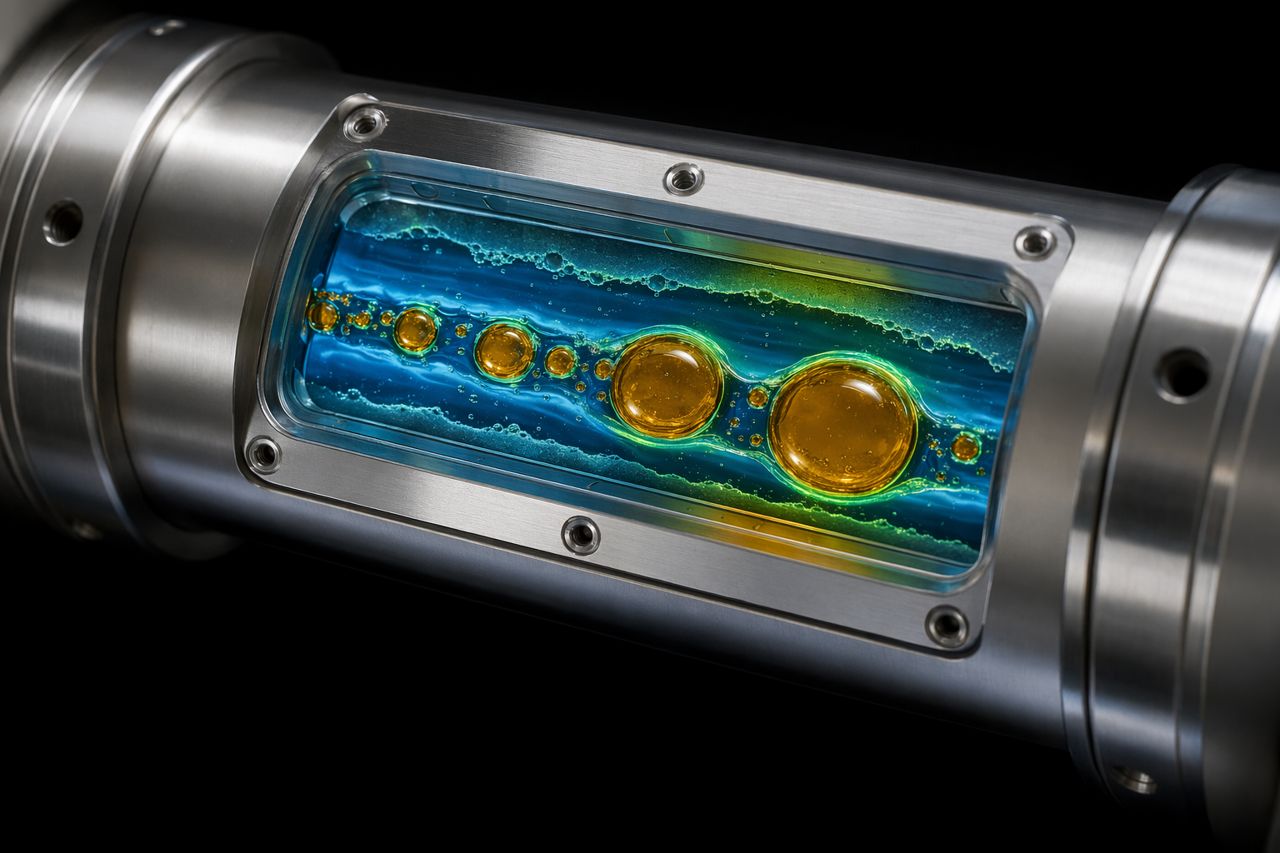
Lipase is an interface-working enzyme. Its useful performance depends not only on bulk pH and temperature, but also on the lipid-water boundary where triglycerides, free fatty acids, emulsifiers, salts, solvents, and process hardware all influence reaction behavior.
For industrial buyers, the key question is not simply “What is the optimum?” It is: Will this lipase hold enough performance under our real process pH, temperature, feedstock variability, residence time, and cleaning conditions to improve cost, yield, or product quality?
This guide outlines how to evaluate pH and temperature compatibility for Lipase (triacylglycerol acylhydrolase) in practical B2B applications.
Why pH and temperature matter for lipase selection
Lipases catalyze reactions involving fats and oils, including hydrolysis, esterification, interesterification, and transesterification. The enzyme’s active structure must remain correctly folded, and the lipid substrate must remain accessible at the interface.
pH and temperature affect:
- Catalytic rate — how quickly the desired lipid conversion proceeds.
- Selectivity — positional preference, fatty-acid preference, and by-product profile.
- Stability — how long the enzyme remains useful during production.
- Emulsion behavior — droplet size, phase separation, and mass transfer.
- Downstream quality — free fatty acid level, flavor impact, soap formation, residual oil, or ester profile.
- Total cost-in-use — dose requirement, hold time, rework, and cleaning frequency.
A lipase that looks strong under simplified screening conditions may underperform in a production matrix if pH drifts, the interface collapses, or temperature accelerates deactivation.
Typical pH behavior: acid, neutral, and alkaline lipases
Industrial lipases are available across a broad pH spectrum. The best fit depends on the application chemistry and the surrounding formulation.
Acidic to mildly acidic conditions
Acid-tolerant lipases are relevant where the process naturally runs at lower pH or where acid development is part of the conversion pathway. Examples include certain dairy, flavor, fat hydrolysis, and specialty ester processes.
Considerations:
- Lower pH can shift the balance between ionized and non-ionized fatty acids.
- Excess acid accumulation can inhibit performance or affect product sensory profile.
- Buffering may be limited in food, feed, or oleochemical systems, so pH drift should be monitored during pilot work.
Neutral pH conditions
Neutral-range lipases are commonly evaluated for edible oil modification, dairy fat processing, wastewater pretreatment, and general lipid conversion steps where mild conditions are preferred.
Considerations:
- Neutral conditions can reduce corrosion risk and simplify downstream handling.
- Many natural emulsions operate near neutral pH, but salts, proteins, and surfactants can still reshape the interface.
- Neutral pH is often a practical compromise between enzyme performance and product compatibility.
Alkaline conditions
Alkaline lipases are especially relevant in detergents, degreasing, textile processing aids, and some wastewater or cleaning applications.
Considerations:
- High pH can improve fat swelling, soil release, and compatibility with cleaning formulations.
- Alkalinity can also promote soap formation in fatty systems, changing mass transfer and foam behavior.
- Compatibility with builders, chelants, oxidants, and surfactants must be verified in the complete formulation.
Temperature: optimum is not the same as process stability
Lipase reaction rate usually increases with temperature until the enzyme begins to lose structure or the interface becomes less favorable. In production, the highest conversion rate is not always the lowest cost option.
A practical temperature evaluation should separate three questions:
- Startup performance: How quickly does the reaction begin at the chosen process temperature?
- Hold stability: Does performance remain consistent through the full residence time or batch duration?
- Thermal exposure history: Has the enzyme been exposed to heat during storage, premixing, dosing, or recirculation before it reaches the substrate?
Lower-temperature processing
Lower temperatures are useful when protecting flavor, reducing energy input, minimizing oxidation, or working with heat-sensitive matrices.
Watchpoints:
- Higher viscosity can reduce mixing and interfacial area.
- Fats may crystallize, limiting substrate accessibility.
- Longer hold times may be required to reach target conversion.
Moderate-temperature processing
Many industrial lipase processes are designed around moderate temperatures to balance rate, stability, fluidity, and equipment compatibility.
Watchpoints:
- Small temperature increases can significantly change droplet behavior and conversion profile.
- pH drift may accelerate as hydrolysis generates fatty acids.
- The best operating point is often where conversion, selectivity, and enzyme lifetime meet—not where the peak rate appears.
Elevated-temperature processing
Elevated temperatures can improve oil fluidity, reduce viscosity, and accelerate reaction kinetics, but they also raise the risk of irreversible enzyme loss.
Watchpoints:
- Short exposure at high temperature may be acceptable; long residence may not be.
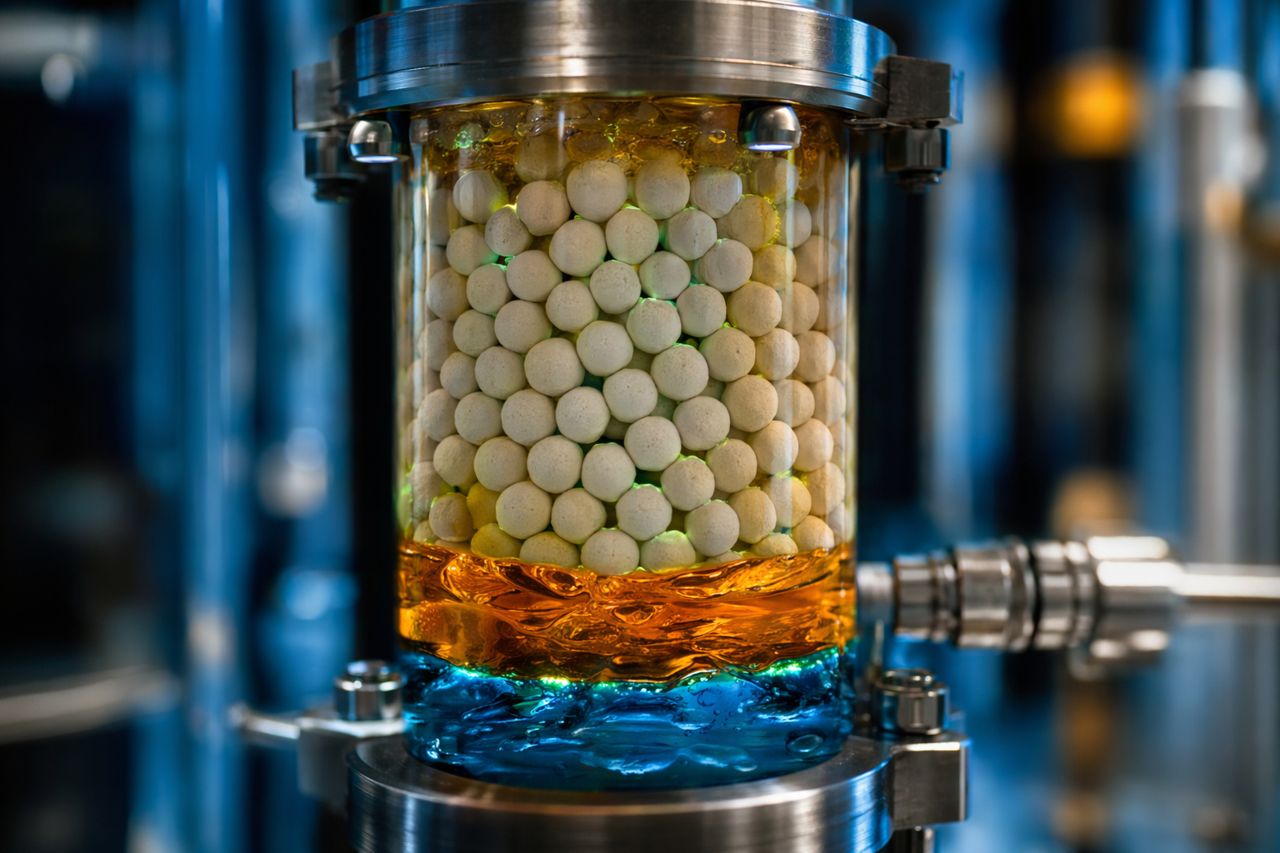
- Immobilized lipases may offer improved handling and reuse, but the carrier, solvent, shear, and cleaning regime matter.
- Thermal stability claims should be checked against the actual feedstock, water level, and process time.
pH and temperature interact at the lipid-water interface
Lipase does not operate in a clean beaker in most industrial settings. It works where oil droplets, water, emulsifiers, salts, proteins, particles, and equipment surfaces meet.
Important interface variables include:
- Water availability: Essential for hydrolysis, but excessive water may shift equilibrium away from ester formation.
- Emulsification: More interface can increase access, but overly stable emulsions may complicate separation.
- Free fatty acids: Product accumulation can reduce pH and alter droplet charge.
- Surfactants and detergents: Can expose lipid substrate or displace the enzyme from the interface.
- Solvent or alcohol presence: Relevant in ester and biodiesel-type systems, but may affect enzyme structure.
- Shear: Can create useful dispersion or cause foaming, deactivation, or separation issues.
Because these factors interact, pH and temperature should be tested together, not as isolated variables.
Application-specific guidance
Oils, fats, and oleochemicals
For edible oil modification, fat splitting, flavor lipid generation, or specialty ester production, pH and temperature influence conversion profile, fatty acid release, and downstream purification.
Buyer questions to define early:
- Is the target hydrolysis, esterification, interesterification, or transesterification?
- Is water content controlled, generated, or removed during the process?
- Is the system batch, packed bed, membrane-assisted, or continuous stirred processing?
- Is the priority yield, selectivity, mild processing, reuse, or simplified separation?
Detergents and cleaning formulations
For detergent lipases, the enzyme must perform in alkaline pH, with surfactants, builders, fragrance components, chelants, and sometimes oxidizing chemistry.
Buyer questions to define early:
- Is the product liquid, powder, tablet, or industrial cleaning concentrate?
- What is the in-use wash temperature range?
- Will the enzyme be exposed to oxidants during storage?
- Is the performance target grease removal, stain release, drain-line fat control, or equipment degreasing?
Wastewater and fat, oil, and grease control
In wastewater and FOG pretreatment, lipase selection must account for variable feed, fluctuating pH, surfactants, salts, and intermittent temperature.
Buyer questions to define early:
- Is the goal liquefaction, odor control, downstream biological load reduction, or line maintenance?
- How variable are incoming fats and cleaning chemicals?
- Is the process aerobic, anaerobic, holding-tank based, or continuous flow?
- How will improvement be measured: oil layer reduction, pumpability, load reduction, odor, or maintenance interval?
Dairy, flavors, and food processing
Lipase can be used to modify milk fat, generate flavor notes, or support controlled fat hydrolysis. pH and temperature choices must protect sensory quality and regulatory fit.
Buyer questions to define early:
- What flavor profile or fatty acid distribution is desired?
- Is lipolysis intended to be limited, moderate, or extensive?
- What heat steps occur before and after enzyme contact?
- How will the enzyme be inactivated, separated, or carried through the process?
How to evaluate lipase compatibility without over-screening
A useful screening plan should reflect the real process envelope rather than only ideal lab conditions.
Recommended evaluation structure:
- Define the operating window — current pH range, temperature range, hold time, water level, feedstock variability, and cleaning exposure.
- Select relevant lipase formats — liquid, powder, granulated, immobilized, or formulated depending on dosing, containment, reuse, and handling needs.
- Run a compact matrix — compare pH and temperature combinations around the actual process, not broad academic extremes.
- Track process-relevant outputs — conversion, free fatty acid formation, ester profile, residual oil, phase separation, viscosity, odor, or cleaning performance.
- Check stability over time — include storage, premix, recirculation, and full residence exposure where applicable.
- Confirm downstream compatibility — separation, filtration, membrane behavior, foam, wastewater impact, and product specifications.
The best candidate is the one that improves the process under realistic constraints, not necessarily the one with the highest short-screen response.
Troubleshooting pH and temperature problems
Conversion is slow
Possible causes:
- Temperature is too low for practical rate.
- Fat is partially crystallized or too viscous.
- Interface area is limited by poor mixing.
- pH is outside the enzyme’s effective range.
- Surfactants or salts are blocking enzyme contact.
Practical checks:
- Adjust mixing before increasing dose.
- Confirm substrate is fluid and accessible.
- Test a small pH shift within product limits.
- Compare staged addition versus one-time dosing.
Conversion starts well, then stops
Possible causes:
- pH drift from fatty acid generation.
- Thermal deactivation during the hold.
- Product inhibition at the interface.
- Alcohol, solvent, or cleaning residues affecting stability.
Practical checks:
- Track pH during the full reaction, not only at start.
- Compare lower temperature with longer residence time.
- Evaluate controlled water level or product removal.
- Review upstream cleaning carryover.
Separation becomes difficult
Possible causes:
- Emulsion is too stable.
- Soap formation is increasing at alkaline pH.
- Protein, gum, or particulate load is stabilizing droplets.
- Shear is generating fine droplets that resist settling.
Practical checks:
- Reduce unnecessary shear after enzyme contact.
- Evaluate pH adjustment before separation.
- Review surfactant load and feed pretreatment.
- Confirm that the target reaction is not overrun.
Procurement notes for industrial buyers
When requesting a lipase recommendation, provide enough process context to prevent mismatched selection.
Useful information includes:
- Application and target reaction.
- Feedstock type and variability.
- Current pH and acceptable pH range.
- Current temperature and acceptable temperature range.
- Batch or continuous processing mode.
- Residence time or contact time.
- Water level and emulsification approach.
- Surfactants, salts, solvents, alcohols, oxidants, or preservatives present.
- Desired output: conversion, selectivity, cleaning performance, odor control, separation, or cost reduction.
- Format preference: liquid, powder, granule, or immobilized.
Lipase Enzyme Solutions can help narrow the selection to lipase options that fit the chemistry, the equipment, and the commercial objective.
Request pricing or a process fit check
Share your pH, temperature, feedstock, and target outcome. We will respond with a practical lipase recommendation path and pricing guidance for your application.
Request a bulk lipase quote
Wholesale and bulk supply for manufacturers, formulators and resellers. To get a quote, send the product you make, the quantity per order or per month, and the destination country, and tell us your application and preferred format (powder, liquid or granule). Pricing, pack format and lead time are quoted per order, and we tell you which documents are available for that grade.