
For production, warehouse and purchasing teams that hold bulk lipase stock. Pack format and pricing are quoted per order.
Request a quote: send the product you make, the quantity per order or per month, and the destination country. Request a quote
How to Store and Handle Industrial Lipase
Lipase (triacylglycerol acylhydrolase) performs at an interface: oil and water, substrate and support, emulsion and reactor wall. Storage and handling should protect that interface-driven behavior from heat, moisture, contamination, aggressive mixing, and unplanned chemistry.
This guide is written for production teams, process engineers, application scientists, and procurement groups managing industrial lipase after evaluation or purchase.
The short version
Industrial lipase is robust when it is kept sealed, cool, dry, and clean. Most handling problems come from four avoidable sources:
- Heat exposure during transport, staging, or production delays
- Moisture ingress into powders, granulates, or immobilized preparations
- Freeze-thaw stress in liquid formats when freezing is not specified
- Process shocks such as extreme pH contact, oxidizers, aggressive solvents, or high-shear dispersion before the enzyme is diluted into the intended phase
Use the product label, certificate documentation, and safety data sheet as the controlling instructions. Where site procedures are more conservative, use the stricter control.
Recommended receiving workflow
1. Inspect on arrival
Before moving lipase into inventory, check:
- Container integrity: no punctures, cracked closures, swollen drums, or compromised liners
- Seal status: tamper indicators intact and closures fully seated
- Label match: product name, lot, net weight, format, and storage instruction
- Transit condition: no prolonged heat exposure, wet cartons, condensation, or leakage
- Documentation: certificate, safety data sheet, and any lot-specific handling notes
If there is visible damage, isolate the shipment and document it with photos before use.
2. Move to controlled storage quickly
Do not leave lipase on a receiving dock, in direct sun, near steam lines, or beside heated process equipment. Short staging time is usually manageable; uncontrolled staging over a shift or weekend is not.
3. Record the lot into FIFO inventory
Use first-in, first-out rotation unless a lot is reserved for a validated campaign. Keep lot identity through dispensing, batching, and partial-container returns.
Storage conditions by product format
Liquid lipase concentrates
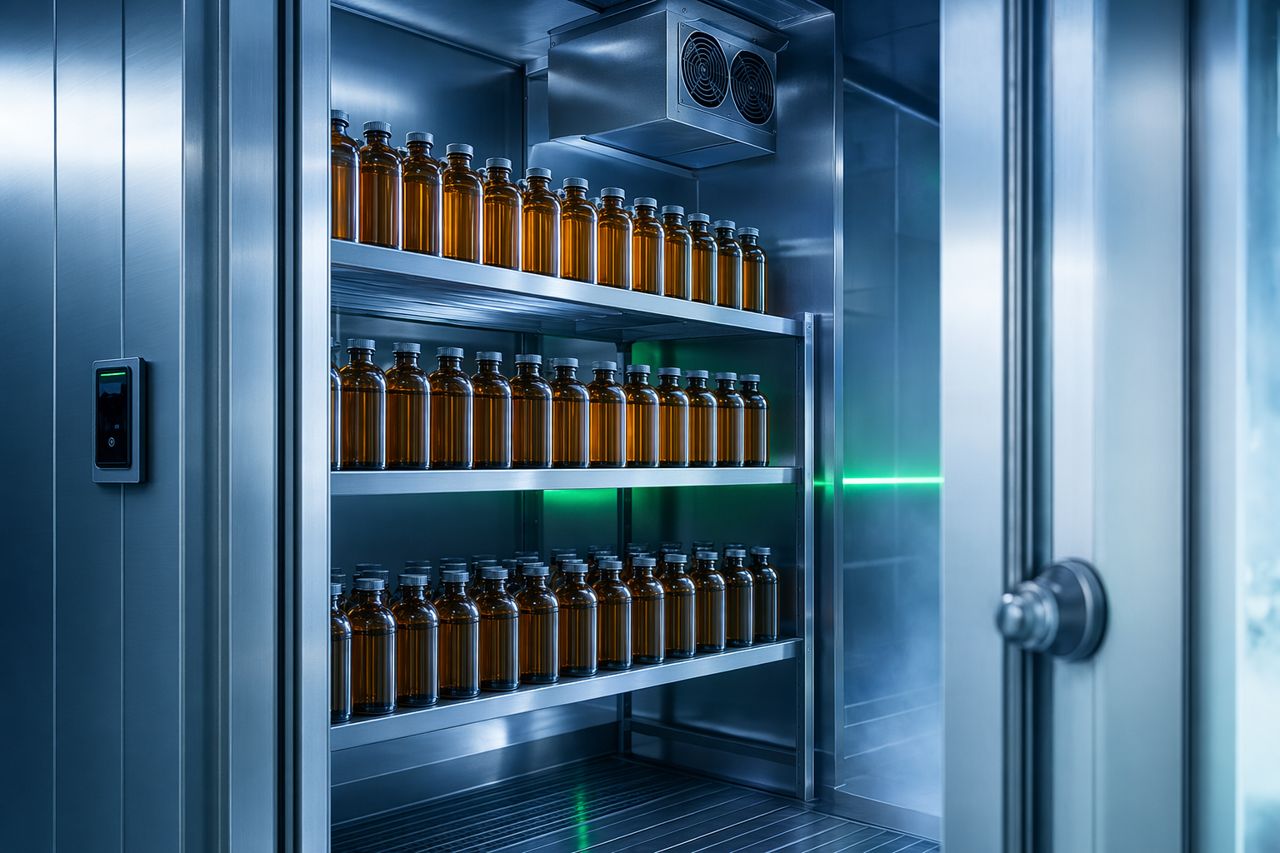
Liquid lipase preparations are generally best stored refrigerated or in a cool controlled room as specified on the label. Protect from freezing unless the product documentation explicitly permits it.
Practical controls:
- Keep containers closed when not dispensing
- Avoid repeated warm-up and cool-down cycles
- Do not store beside caustic, acid, oxidizing agents, or strong solvent vapors
- Use clean transfer lines and dedicated pumps where cross-contamination would affect production
- Mix gently before dispensing if the product documentation allows it and visible settling is present
Avoid vigorous aeration. Foam can create unnecessary air-liquid interface stress and makes accurate dosing more difficult.
Powdered or granulated lipase
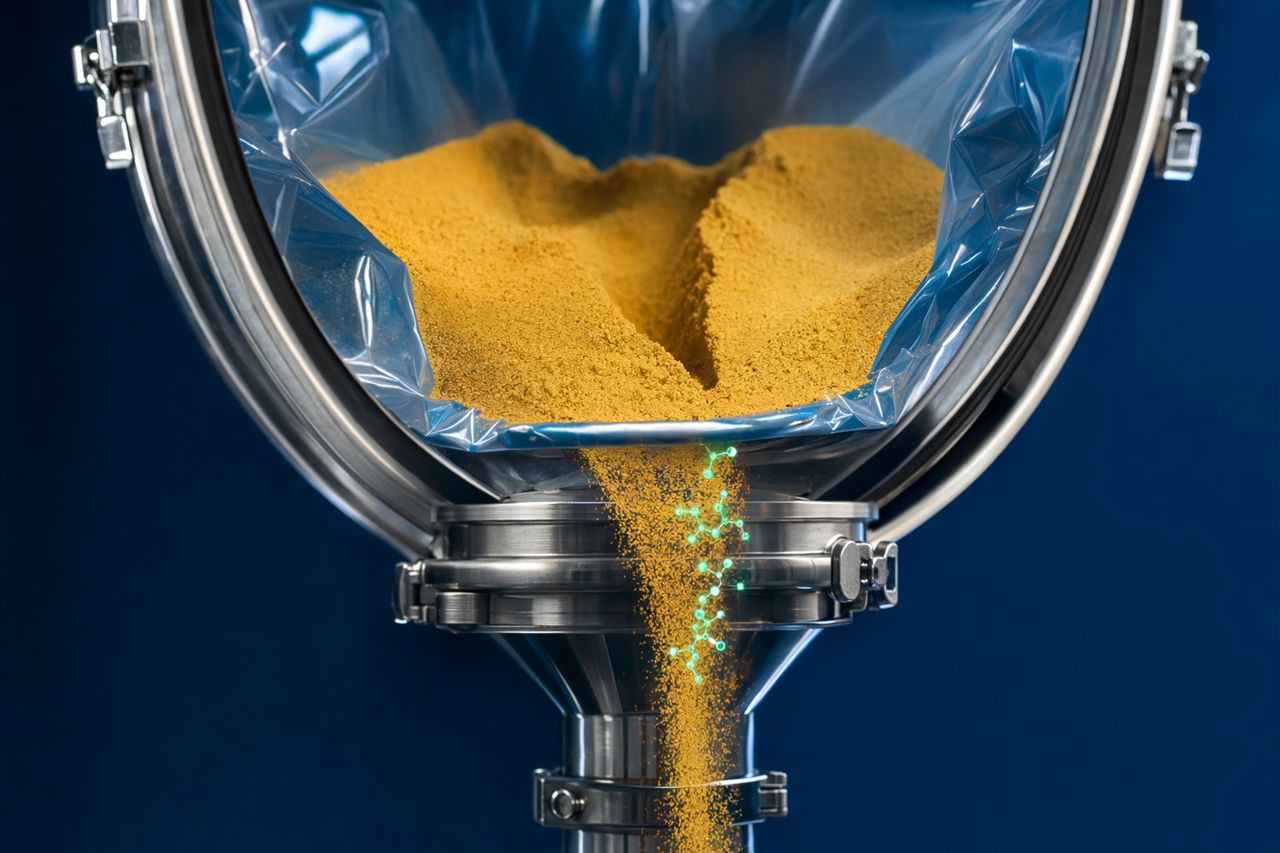
Dry lipase formats should be protected from humidity. Moisture can trigger clumping, uneven dispersion, and loss of predictable handling.
Practical controls:
- Store sealed in the original moisture-barrier packaging
- Reseal immediately after dispensing
- Avoid opening in washdown areas or near humid exhaust
- Use dry scoops, dry transfer hoppers, and dry weighing boats
- Do not return exposed material to the primary container unless your quality procedure allows it
If powder becomes caked, visibly wet, or discolored, quarantine it for review before production use.
Immobilized lipase
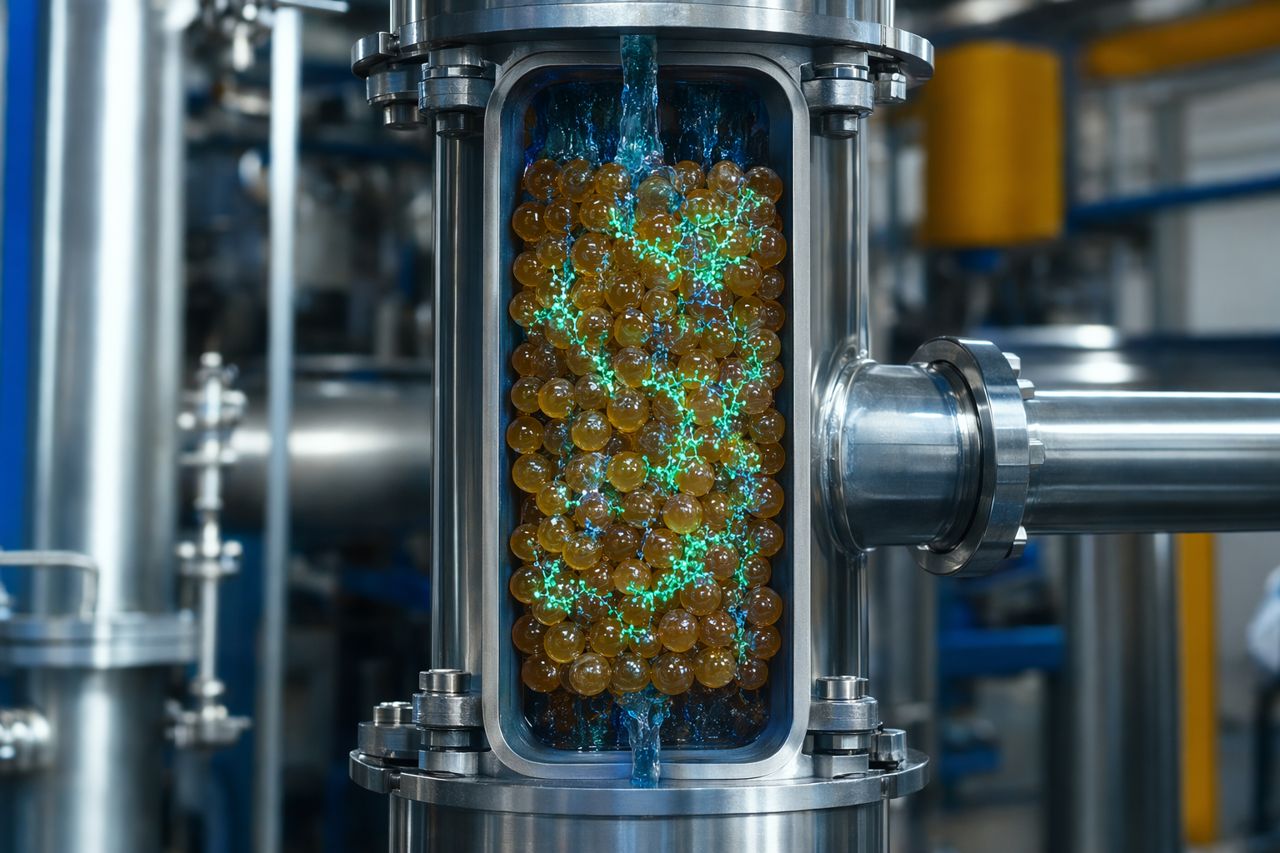
Immobilized lipase is designed to function on a carrier surface. Protect both the enzyme and the support.
Practical controls:
- Avoid crushing, attrition, and high-impact transfer
- Keep the material sealed against moisture pickup and dust contamination
- Do not expose to incompatible solvents during storage
- Precondition with the intended process phase only when the process protocol calls for it
- Prevent fines from entering equipment where they could restrict flow or foul downstream filters
For packed-bed use, avoid sudden pressure changes and dry-wet cycling unless validated.
Handling at the point of use
Dispensing without drift
Lipase handling should be treated as controlled material handling, not as an informal production add-in.
Recommended practices:
- Confirm product, lot, and campaign before opening.
- Allow containers to equilibrate only as needed to prevent condensation.
- Open for the shortest practical time.
- Dispense with clean, compatible tools.
- Reseal immediately.
- Record partial-container mass or volume.
- Return to storage promptly.
For powders, manage dust exposure with local exhaust, closed transfer, or appropriate containment. Enzyme dust can cause respiratory sensitization; follow the safety data sheet and site industrial hygiene program.
Reconstitution and dilution
Lipase should be introduced into the process in a way that gives it access to the lipid interface without shocking the protein.
Good practice:
- Add liquid lipase into the compatible aqueous phase or designated feed stream
- Add powder slowly to the vortex edge or pre-wet according to your process protocol
- Use moderate mixing to disperse without excessive foam
- Avoid direct contact with concentrated acid, concentrated alkali, oxidizers, or undiluted surfactant slugs
- Confirm that temperature and pH are within the intended process window before charging
For emulsion-based processes, enzyme addition after stable pre-emulsification may improve contact consistency. For immobilized systems, stable feed composition and controlled flow are usually more important than aggressive mixing.
In-process conditions that protect performance
Lipase depends on conformation, interface access, and substrate availability. The following process variables are worth controlling tightly:
Temperature
Operate within the validated process window. Short heat spikes can matter even if the batch average looks acceptable. Watch for localized hot spots at heat exchangers, recirculation loops, and jacket inlets.
pH
Lipase products are often formulated for a defined application range. Avoid charging the enzyme before pH correction if the vessel contains a harsh intermediate. When possible, adjust the batch first, then add lipase.
Water management
In hydrolysis, water is a reactant. In esterification or transesterification, excess water may shift the reaction balance or create unwanted by-products. Store and dose with the water balance of the process in mind.
Solvent and surfactant exposure
Some lipase preparations tolerate selected organic media or surfactants; others do not. Compatibility is product- and process-specific. Avoid assuming that tolerance in one formulation transfers to another.
Shear and foam
Moderate mixing improves mass transfer. Excessive shear can break emulsions into distributions that change downstream separation, generate foam, or damage immobilized particles. Use the lowest agitation that gives reliable contact.
Cross-contamination control
Lipase can affect oils, fats, dairy streams, flavors, detergents, and ester intermediates even at low carryover. Control contact surfaces accordingly.
Recommended controls:
- Dedicated dispensing tools for enzyme materials
- Closed containers for partial returns
- Labeled transfer hoses and pumps
- Clean-in-place procedures validated for proteinaceous residues where relevant
- Segregated storage from incompatible enzymes, allergens, oxidizers, and strong odor materials
If your plant handles products where fat hydrolysis is undesirable, treat lipase as a high-attention material.
Shelf-life management
Use the supplier-stated retest or expiry date together with your internal release procedure. Shelf-life assumes recommended storage and sealed packaging; it does not automatically apply after repeated opening, temperature abuse, or moisture exposure.
Track:
- Opening date
- Number of openings where required
- Storage deviations
- Partial-container location
- Campaigns using the lot
- Any visual change, odor shift, leakage, clumping, or phase separation
A lot that has been mishandled should not be blended into production simply to avoid waste. Quarantine first, then decide based on documented quality review.
Troubleshooting common storage and handling issues
Lower-than-expected conversion or slower reaction
Likely contributors:
- Heat exposure before use
- Incorrect pH or temperature at addition
- Poor dispersion into the lipid interface
- Inhibitory solvent, surfactant, preservative, or cleaning residue
- Moisture deviation in esterification-type systems
- Old partial container with unknown opening history
Clumping or poor powder wet-out
Likely contributors:
- Humidity ingress
- Cold container opened in a humid room, causing condensation
- Addition too fast into a poorly mixed vessel
- Wet scoop or wet hopper
Foaming after addition
Likely contributors:
- Excessive agitation
- Air entrainment through recirculation
- Incompatible surfactant system
- Charging position too close to pump suction or liquid surface turbulence
Pressure rise in immobilized beds
Likely contributors:
- Fines generated during handling
- Feed particulates
- Viscosity increase
- Precipitated salts or emulsified solids
- Bed compaction from rapid flow changes
Practical storage checklist
Use this checklist for operator training and batch readiness:
- Product identity confirmed before opening
- Lot and expiry/retest date recorded
- Container inspected and clean before staging
- Storage condition maintained until use
- Dispensing tools clean, dry, and compatible
- Open time minimized
- Container resealed immediately
- Partial container returned to controlled storage
- Temperature and pH confirmed before enzyme addition
- Mixing set to validated range
- PPE and dust controls in place
- Deviations documented before batch release
When to involve Lipase Enzyme Solutions technical support
Contact us before changing storage or handling if you are:
- Moving from lab bottles to drums, totes, or bulk dosing
- Switching from liquid to powder or immobilized lipase
- Introducing a new solvent, surfactant, preservative, or cleaning program
- Extending hold time after dilution
- Reusing immobilized lipase across campaigns
- Validating a new reactor geometry or packed-bed configuration
- Investigating conversion drift without a clear raw-material change
Early review is usually faster than troubleshooting after a production hold.
Request pricing or technical fit guidance
Tell us your application, lipase format preference, operating window, and packaging needs. Lipase Enzyme Solutions will route your request to the right technical and commercial contact.
Request a bulk lipase quote
Wholesale and bulk supply for manufacturers, formulators and resellers. To get a quote, send the product you make, the quantity per order or per month, and the destination country, and tell us your application and preferred format (powder, liquid or granule). Pricing, pack format and lead time are quoted per order, and we tell you which documents are available for that grade.